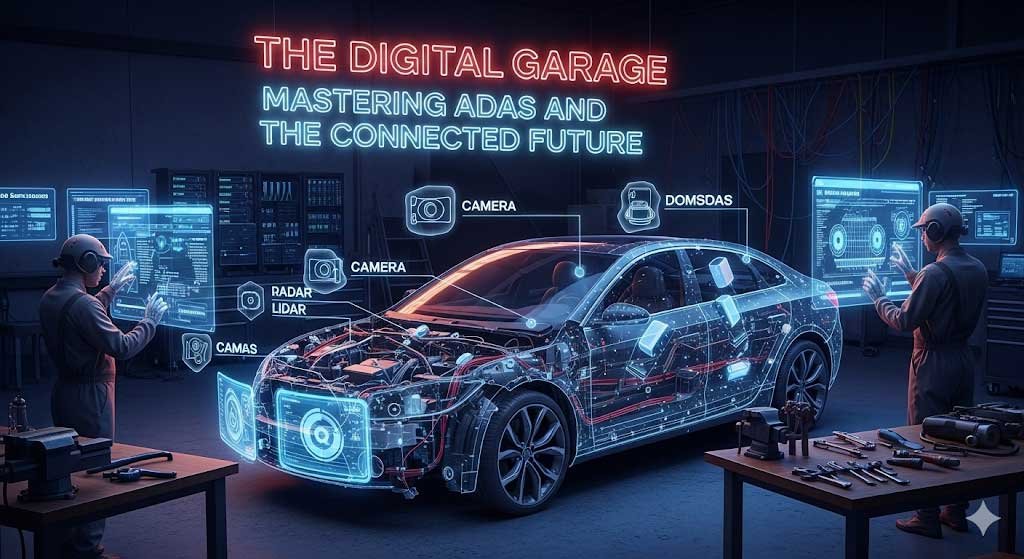
The modern vehicle is no longer just a collection of mechanical parts; it is a sophisticated, interconnected computer system on wheels. This shift, known as the era of “Software-Defined Vehicles” (SDVs), is moving innovation from hardware to software, redefining not only the car’s features but also the maintenance processes. The most immediate and profitable manifestation of this digital transformation for professionals is the proliferation of Advanced Driver Assistance Systems (ADAS).
Das neue Geschäftsfeld: ADAS und die Nachfrage nach Kalibrierung
Systems like adaptive cruise control, lane-keeping assistance, and automatic emergency braking have become standard features on almost all new vehicles. These systems, which dramatically improve safety, rely on a complex network of sensors, cameras, radar, and lidar. Their correct operation depends on extremely precise calibration, an intervention that has now become mandatory after numerous types of repairs. Even a simple windshield replacement, a suspension adjustment, a wheel alignment, or a minor fender-bender require accurate recalibration to ensure sensors provide correct data to the vehicle’s control system.
This need for calibration is a new, significant revenue stream for workshops. With a growing number of ADAS-equipped vehicles moving beyond their warranty period, the demand for these services is exploding. Calibration service presents itself as a high-margin opportunity that can be offered both as a standalone service and as an add-on to more traditional repairs. The calibration service, therefore, transforms an expense into a earning opportunity, offering a clear competitive advantage to workshops that specialize in this technology.
Eine lukrative Investition: Ausrüstungskosten und ROI
While the demand for ADAS services is high, the barrier to entry is the initial investment in specialized equipment. ADAS calibration equipment is a major purchase, with prices varying significantly from basic packages costing a few thousand dollars to comprehensive systems that can exceed $40,000. However, this cost is largely justified by the service’s profitability. The cost to the customer for an ADAS calibration can range from a few hundred to over a thousand dollars, depending on the system’s complexity and the vehicle.
Die hohen Anschaffungskosten für die Ausrüstung können schnell wieder hereingeholt werden. Der Return on Investment (ROI) ist rasch, sodass ein Betrieb seine Anfangsinvestition bereits nach wenigen Dutzend Aufträgen wieder decken kann.
ADAS-Ausrüstung
Geschätzte Kosten
Durchschnittliche Kosten pro Kalibrierung
Anzahl der Kalibrierungen bis zur Gewinnschwelle
Basispaket (z.B. Autel IA800)
$3,695 – $5,250
$300 – $800
5-15
Komplettpaket (z.B. MaxiSYS IA900)
$24,000 – $42,000
$300 – $800
40-140
Die Angaben basieren auf Listenpreisen und den in Quellen genannten Kosten pro Kalibrierung.
Dies zeigt, wie eine vermeintlich hohe Investition die Möglichkeit eröffnet, erhebliche und nachhaltige Gewinne zu erzielen. Zudem kann die ADAS-Kalibrierung in Partnerschaft mit Karosserie- und Unfallreparaturwerkstätten angeboten werden, wodurch die Einnahmequellen weiter diversifiziert werden.
Jenseits von ADAS: Die Zukunft der Wartung ist datengesteuert
ADAS is just the first step towards a fully interconnected automotive ecosystem. Digitization is creating new opportunities that go beyond simple calibration. Artificial intelligence (AI) is revolutionizing diagnostics, with tools that allow mechanics to identify problems with greater precision and speed, often before they become critical. This shift from reactive repair to proactive, predictive maintenance offers a higher-value service for customers.
In addition, the Internet of Things (IoT) in connected vehicles paves the way for new service models. Vehicles can send real-time data to workshops, allowing for remote diagnostics and proactive scheduling of interventions. The technician’s role is evolving from a mechanical expert to a “data analyst” or “automotive IT specialist”. Software diagnostic skills, real-time data interpretation, and electronic system management are becoming essential, often more important than pure mechanical ability. This change means that workshops that not only invest in equipment but also in ongoing training for their employees will be in a prime position to excel in this new competitive landscape. The repair industry is moving from a “we fix anything” model to a high-tech, specialization model , and success will depend on the ability to embrace this digital transformation in every aspect of the business.
Strategische Empfehlungen und Bildkonzept
Der Schlüssel zum zukünftigen Erfolg in der Automobilbranche ist Anpassung. Fachleute, die den Wandel annehmen und in spezialisierte Schulungen sowie modernste Ausrüstung für Elektrofahrzeuge und ADAS-Systeme investieren, werden in einem sich entwickelnden Markt fest positioniert sein, um erfolgreich zu sein. Es ist unerlässlich, diese neuen Fähigkeiten aktiv zu bewerben, Zertifizierungen und Technologien vorzuzeigen, um Vertrauen aufzubauen und die Kunden der Zukunft zu gewinnen.